

Illustrative, using the Meta CPM figure this playbook cites elsewhere and a repeat rate near the reported ecommerce average. The mechanism holds at any numbers you substitute.
The slow failure from chapter 1.3 is a store where every order is a first order, so every sale has to be bought again at a CPM that has risen roughly 89% since 2020. The arithmetic out is straightforward: a returning customer costs nothing to acquire, so moving even three orders in ten to returning buyers cuts your blended acquisition cost by about a third. Reported ecommerce repeat-customer rates average somewhere near 28%, so that is not an ambitious target, it is the middle of the distribution.
The arithmetic of the treadmill
Chapter 1.3 ended its failure list with the one that does not kill quickly: a store with nothing that brings a customer back, where every single sale has to be bought again from scratch. It rarely fails dramatically. It just stops being worth the hours.
Here is why, stated as a number. If ten orders each carry a full acquisition cost, your blended cost per order is that full cost. If three of those ten come from people who already bought, the same ten orders cost you seven acquisitions.
That is the whole mechanism, and it is not a way to make ads cheaper. Your CPM is unchanged, your cost per new customer is unchanged, and chapter 2.2's break-even maths on a first order is unchanged.
What changes is the denominator. And unlike almost everything in the ad account, it compounds: this month's retained customers are still retained next month.
Retention is not a marketing channel. It is a discount on every channel you already run. The Dropshipping Playbook
First, check whether your category allows it
This is the honest caveat most retention advice skips, and for dropshipping it is decisive.
Reported repeat rates vary enormously by category: figures in the region of 10% are typical for high-consideration or genuinely one-off purchases, while consumables and subscription categories are reported at 60% and above. The ecommerce average sits somewhere near 28%.
If you sell something a person needs once every eight years, no email sequence fixes that. The lever is upstream, in what you chose to sell:
| Product type | Natural repurchase | What retention work can realistically do |
|---|---|---|
| Consumable or refill | Weeks to months | A lot. Timing the reminder is most of the job |
| Collectable or range item | Ongoing | A lot. New arrivals do the work |
| Seasonal or gifting | Annual | Some. One well-timed contact a year |
| Durable, single purchase | Years | Little. Sell accessories, or accept the model |
If you are in the last row, the honest move is to stop reading this chapter and put the effort into chapter 4.1 instead. A durable-goods store makes its money on the size of the first order, not the second.
The post-purchase window is the whole opportunity
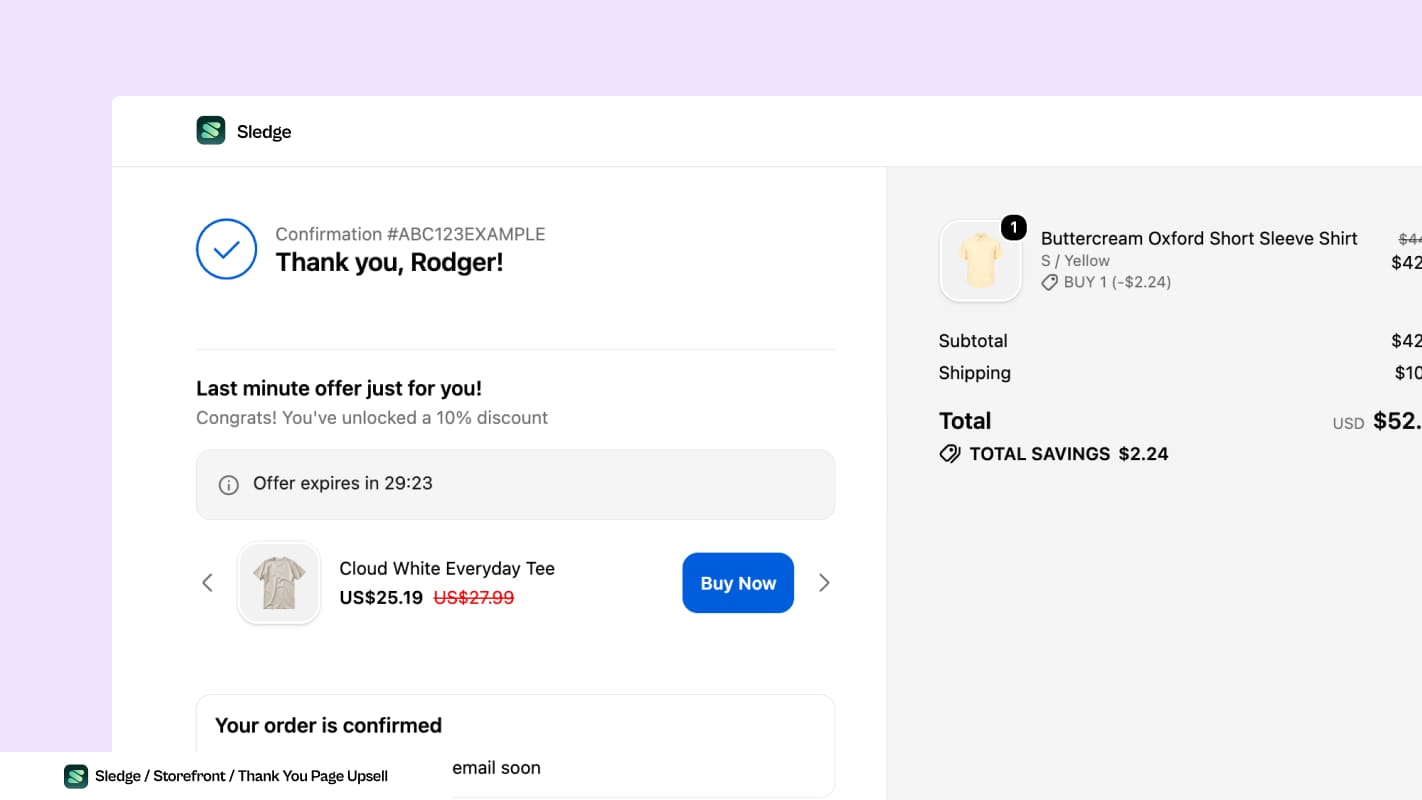
The offer sits on the page the customer is already reading, minutes after paying. No email needed for the first attempt at a second order.
There is exactly one moment when a customer is paying full attention to your store, feels positive about it, and has given you a working contact address. It lasts a few days and most dropshipping stores spend it on a tracking number.
What that window can carry, roughly in order:
- An honest delivery expectation, restated. For a longer dropship lead time this is the difference between patience and a chargeback
- What to do when it arrives, which is the one piece of content only you can write
- The complement or refill, timed to when the first item is actually in their hands rather than the day they ordered
- A request for a review, after delivery, which is where the honest social proof in chapter 4.7 comes from
- A reorder prompt timed to the real consumption cycle, not a generic 30 days
Note the ordering. Three of the five are service rather than selling, and they come first because the sequence has to earn the fourth and fifth. A reorder prompt sent before the first order arrived reads as a store that does not know what it has done.
Chapter 2.4 documented flows that sat marked active for months while sending nothing, with no error anywhere in the admin. Before optimising the content of a post-purchase sequence, place a real order and confirm every email in it arrives, including the second and third, which is where sends quietly stop.
The retention that is not email
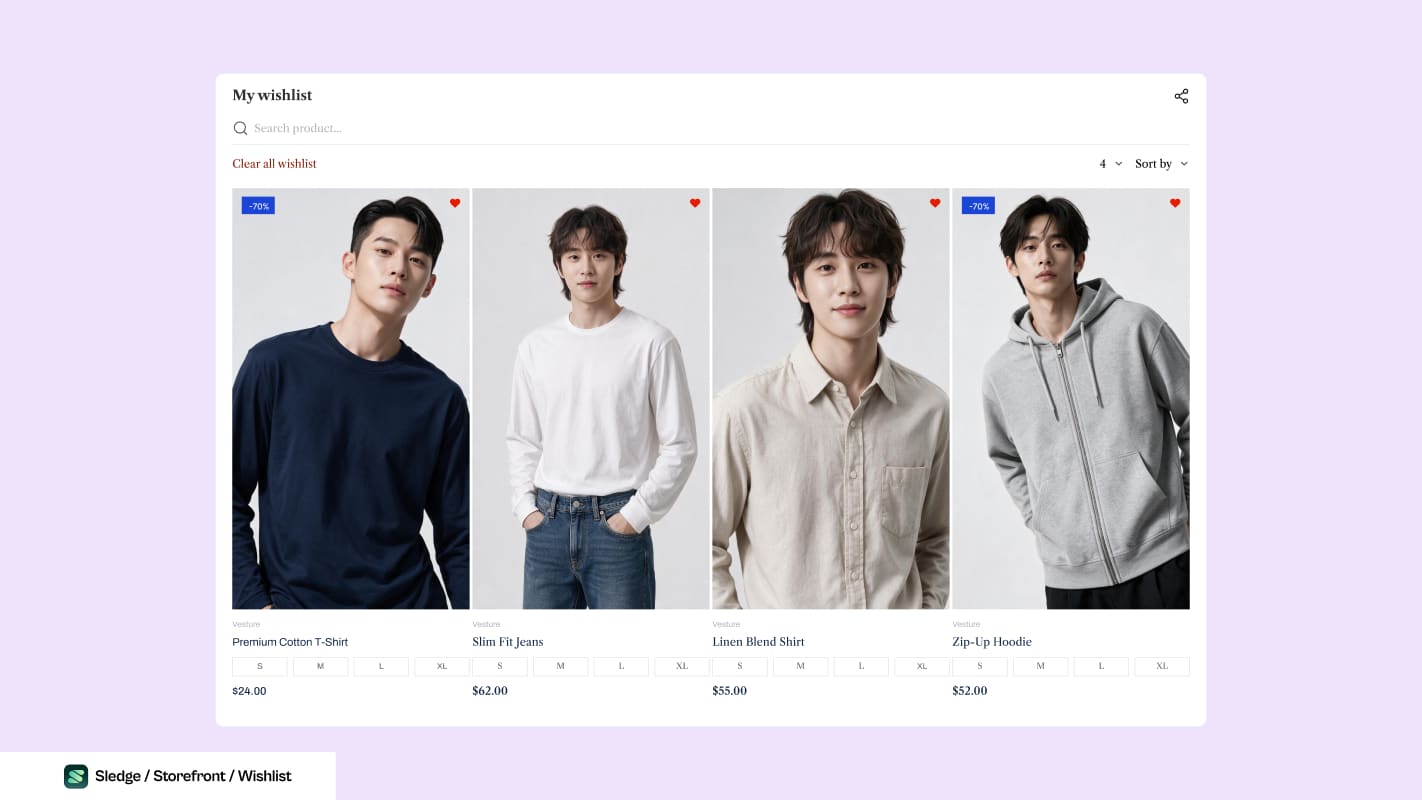
A saved list is a reason to return that needs no address and no send. It also records what a visitor wanted before they were ready to buy.
Email and SMS get all the attention, and they only reach people who gave you an address. Chapter 2.4 put the reachable share of cart abandoners at roughly 15%; the reachable share of past customers is much better but still not everyone.
What works on the store itself, for a returning visitor who arrived without being emailed:
- Reorder made trivial. A returning customer should reach their previous purchase in one action, not by searching for it again.
- New arrivals visible. A range store with no obvious "what is new" gives a returning visitor the same page they saw last time, which answers their only question badly.
- The threshold still working. The free-shipping mechanic from chapter 4.1 applies to second orders too, and second orders are where it is cheapest to exploit.
- Nothing that punishes loyalty. A first-order-only discount shown to a returning customer is an odd thing to put in front of the person you most want back.
How to measure it without fooling yourself
- Repeat customer rate: customers with more than one order, over total customers, in a fixed window. Fix the window or the number drifts as the store ages.
- Blended CPA: total acquisition spend over total orders. This is the number the treadmill actually shows up in.
- Contribution per repeat order, separately from first orders. If returning customers only buy on a code, retention is rising while contribution is not.
- Time to second order, which tells you when to send the reorder prompt rather than guessing at 30 days.
Widely quoted figures put repeat customers at around three times the spend of first-timers per visit, and small retention improvements at large profit effects. Both are directionally supported and both come from sources with retention software to sell. Use the mechanism on this page, which is arithmetic, and treat the multipliers as encouragement rather than as a forecast.
Common questions
What is a good repeat purchase rate?
Isn't retention impossible when you dropship generic products?
What's the single highest-value retention move?
Do discounts drive repeat purchases?

The app behind these fixes
Most of Level 04 is a setting in Sledge rather than a project.
See it on the Shopify App Store