

The test in the heading is the whole chapter. Everything in the left column survives being asked about; nothing in the right column does.
Urgency works when the deadline is real, because a real deadline is information: it tells a shopper that waiting has a cost. It stops working, and starts costing, the moment it is invented, because a countdown that resets on reload and a stock counter that never moves are both checkable in seconds. For a dropshipping store the downside is larger than lost trust: manufactured urgency sits on the same list as fabricated reviews when a platform risk review looks at whether a store is what it claims to be.
One test, applied to everything
Before adding any urgency element, ask a single question: if a customer emailed and asked me to explain this, could I?
"The sale ends Sunday at midnight and here is the campaign that says so" survives that. "The timer says four minutes, but it says four minutes for everyone, forever" does not.
The reason this matters more than a general point about honesty is that the second kind is trivially checkable. A shopper reloads the page and the timer restarts. They come back tomorrow and there are still exactly three left. It takes one moment of mild curiosity, and what it reveals is not that the offer was oversold; it is that the store will say untrue things when it suits it. That conclusion does not stay confined to the timer.
Manufactured urgency does not fail because it is dishonest. It fails because it is checkable, and the checking takes one reload. The Dropshipping Playbook
The dropshipping-specific downside
For most retailers this is a trust question. For a dropshipping store on Shopify there is a second, sharper edge.
Chapter 1.3 catalogued what appears in store-termination threads. The common thread in those reports is automated risk review asking whether a store is a real business or an imitation of one, and the signals it appears to weigh are exactly the ones in the right-hand column of the figure above.
You are not choosing between a slightly higher conversion rate and a slightly cleaner conscience. You are choosing between a small lift and a category of risk where the downside is the whole account, applied without warning and appealed without detail.
The urgency you can actually use
Plenty is available without inventing anything. Most of it is underused precisely because it is less dramatic.
| Mechanism | Why it is true | Best used on |
|---|---|---|
| Dispatch cut-off | Your fulfilment day is real | Product page and cart |
| Delivery-by date | Arithmetic on your real lead time | Seasonal and gifting periods |
| Campaign end date | You set it and you will honour it | Site-wide, time-boxed |
| Genuine low stock | Only if bound to a real count | Product page, sparingly |
| Pre-order window | The window genuinely closes | New or restocked lines |
| Free-shipping threshold | A rule, not a deadline | Cart, per chapter 4.3 |
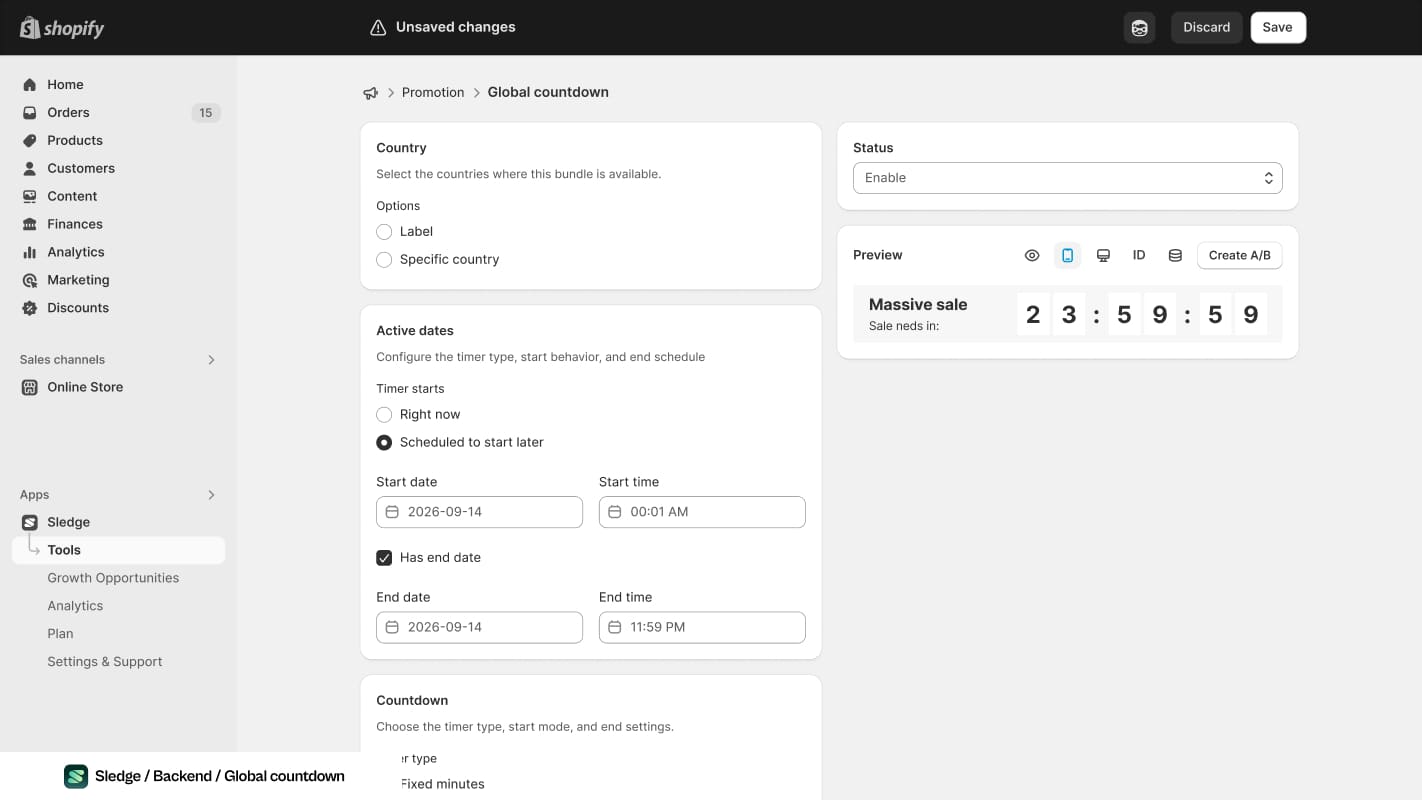
The end date is a field you fill in once. That is what makes the deadline checkable, and what obliges you to honour it.
The first two are the strongest and the least used. "Order in the next 6 hours for dispatch today" is urgency, it is a service statement, and it is true. It also does the job chapter 3.3 keeps returning to: it tells a shopper when the thing arrives, which is one of the three questions a cart has to answer anyway.
Campaigns beat permanent discounts
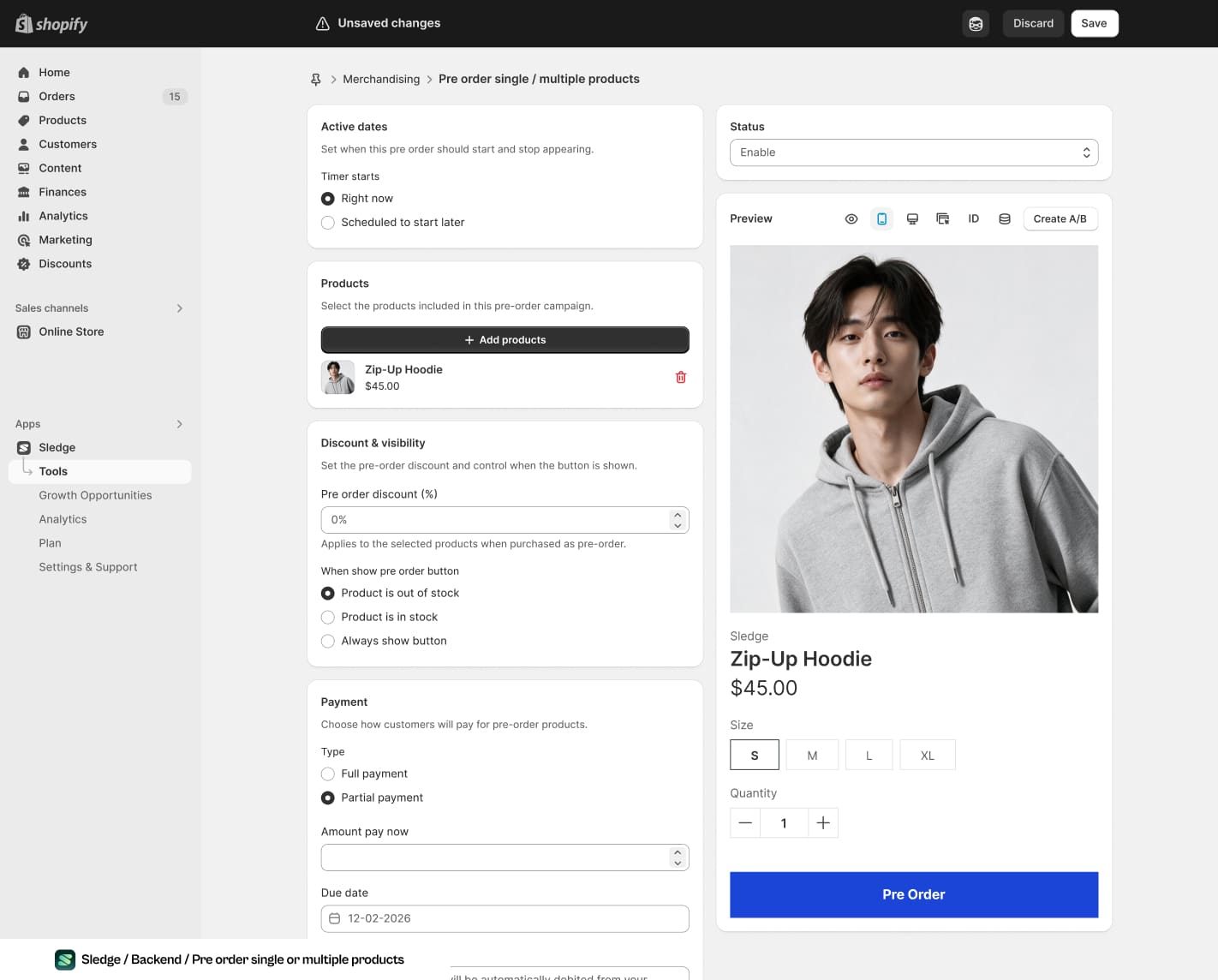
A pre order window is a campaign with a product attached. It opens, it closes, and the price goes back on its own.
A time-boxed campaign and a permanent sale price are often treated as the same tool. They behave in opposite ways.
A 20% campaign discount on a 50% margin product does not cost 20% of your profit. It costs 40% of it, and it moves your break-even ROAS from 2.0x to 2.5x for the duration. Run the number from chapter 2.2 before you set the percentage, not after.
One operational warning
A campaign that works produces a sales spike, and a sales spike on a new dropshipping store is one of the documented triggers for a payment reserve. Chapter 1.3 covers the mechanism: an automated system compares your day against your own 30-day average and cannot tell a successful campaign from fraud.
This is not a reason to avoid campaigns. It is a reason to expect it, keep fulfilment fast during the spike, and not plan on that revenue being liquid the following week.
Common questions
Do countdown timers actually work?
Is showing low stock a good idea?
How often should I run a sale?
What about a permanent 'was $X, now $Y'?

The app behind these fixes
Most of Level 04 is a setting in Sledge rather than a project.
See it on the Shopify App Store